
The Portfolio Project
The Approach
The Portfolio Project is an in-person workshop held in your market. There are no lectures and no generic advice; the sessions are highly interactive and built for the complexity of the regional manager role.
Participants turn off their devices and through guided exercises discover that there are no fixed answers in this role, and outcomes are shaped only by perspective and approach. Participants use proprietary frameworks to deconstruct the obstacles absorbing capacity and map out sustainable solutions for rebuilding it.

The Focus
Every portfolio is unique; therefore, standardized solutions that ignore the complexity of the system often fall short. In this role, systems thinking is the most valuable skill to sharpen. We focus on honing this through practical application, bringing hidden structures into visibility, learning methods to uncover second-order consequences, and applying frameworks to reveal possibility.
Our focus begins with understanding the underlying patterns that absorb capacity, then utilizing that insight to reduce the barriers that stall progress. The following represent some of the challenges we break apart and reframe through this lens.

-
The regional’s “fires” aren’t simple problems. They’re urgent, complex, and create immediate pressure. Resolving them requires resources: time, money, or people. When those resources aren’t in your control, aligning decision-makers adds layers of complexity that can allow problems to grow.
Standard processes like the “Five Whys” are built to uncover a single root cause, which is not the reality most regionals face. Guidance to coach managers to spot issues sooner overlooks the systemic factors driving the problem. We must shift from analyzing isolated problems to understanding the broader system that creates them.
-
No property, team, market, or budget is the same, yet capacity is often discussed using standard metrics. When this occurs, high-value capability is underutilized while operational friction goes unaddressed.
Rebuilding capacity requires a language to understand these non-linear demands, not through a rigid formula, but through a shared understanding of how bandwidth is truly consumed.
-
The regional manager is not a property manager multiplied by five. Yet, an environment where everything is urgent and tied to performance often forces a shift from strategic oversight into constant project management.
Conventional guidance to 'lead instead of do' often misses the structural constraints that pull regionals back into the weeds. Before strategy can be prioritized, we must identify the forces that make “doing” the only path to survival. We have to stabilize the center of the system before we can expand its reach.
-
The rapid growth of the industry contributed to today's cycle of chronic understaffing. The gaps filled by temporary support cannot match the decision-making or output of an experienced team member. A new hire stepping into a vacant role does not enter a steady-state environment; they enter a system of backlog that often impedes retention and repeats the cycle.
In a cost-constrained environment, building resilience focuses on designing for the reality of this cycle, rather than the assumption of a static, full-strength team.
-
Before 2020, property manager readiness was built over years of exposure to different environments and leadership styles. Today, accelerated growth forces promotions out of necessity, often before candidates are fully prepared for the scope and complexity of the role. What is missing is the space where aspiring property managers build independent judgment and understand the downstream impact of their decisions. While the assistant manager role historically supported this progression, it was never a complete solution. Now, as centralization and automation reduce local autonomy, the path to readiness has become even steeper.
This evolution presents an opportunity to refine how we define and support role-readiness.
-
Property managers view performance through a ground-level, tactical lens, while asset managers frame the same issues within the context of financial and strategic impact. Both perspectives are necessary, yet they often exist in direct tension.
The regional manager serves as the essential filter between these two worlds, translating operational reality into the language of the client while converting high-level expectations into actionable direction for the team. This "hidden work" requires mental agility, a skill that is often underestimated and requires intentional development.
-
When performance falls below expectations, attention naturally shifts toward the capability of those leading it. Defending or justifying results can often appear as excuses, weakening credibility. The result is frustration, for both parties.
Articulating how external pressures and property-level factors shape results is critical to maintaining professional trust. Aligning on both realistic constraints and possible opportunities is essential before devising a strategy to navigate them.

The Details
Designed as an immersive experience, the project utilizes small-group dynamics to ensure high-value outcomes for each participant. Choose to engage as a participant, sign up as a host, or scale the project within your company as a guide.
-
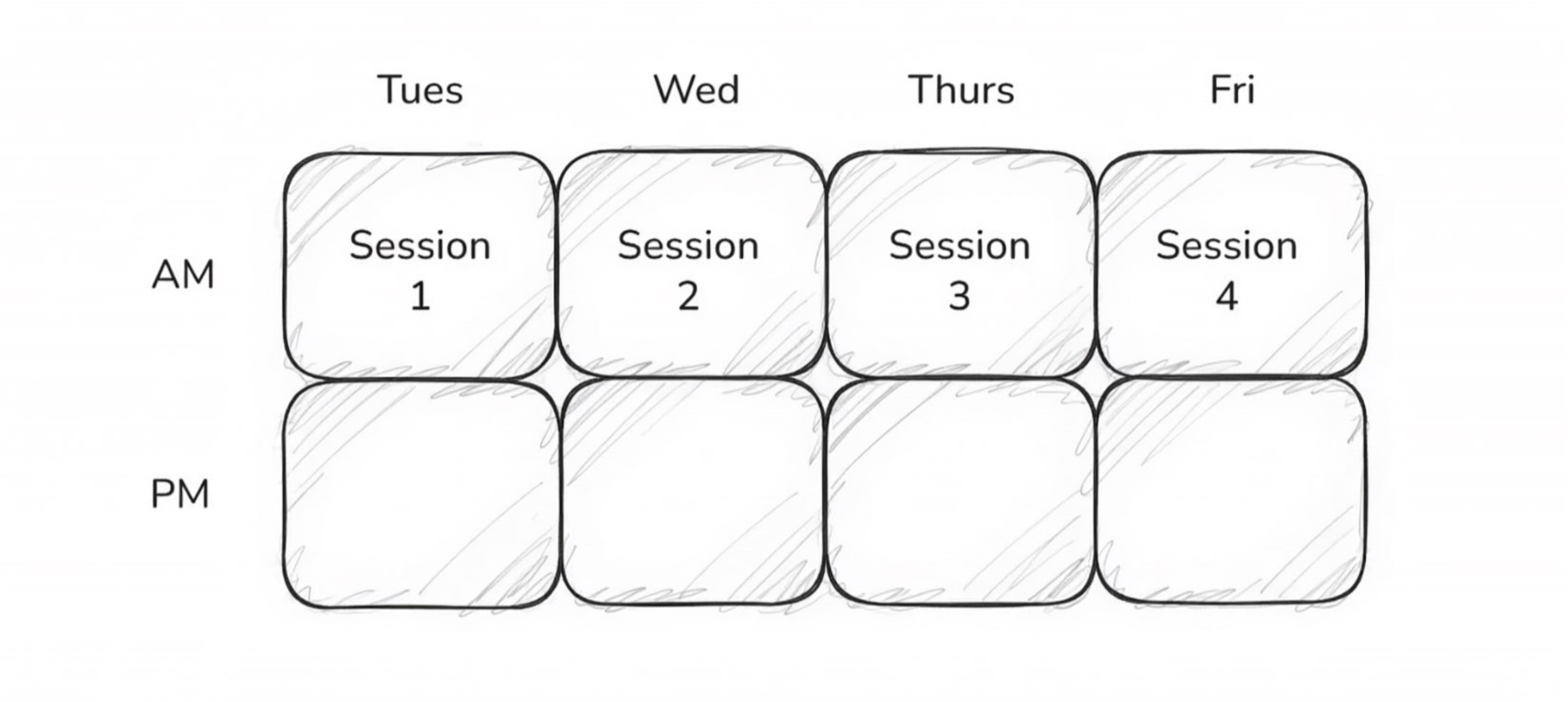
The workshop takes place over four consecutive days. Each day is a 4-hour session, totaling 16 hours.
Interactive Limit: To ensure the project stays on schedule, sessions are limited to six participants.
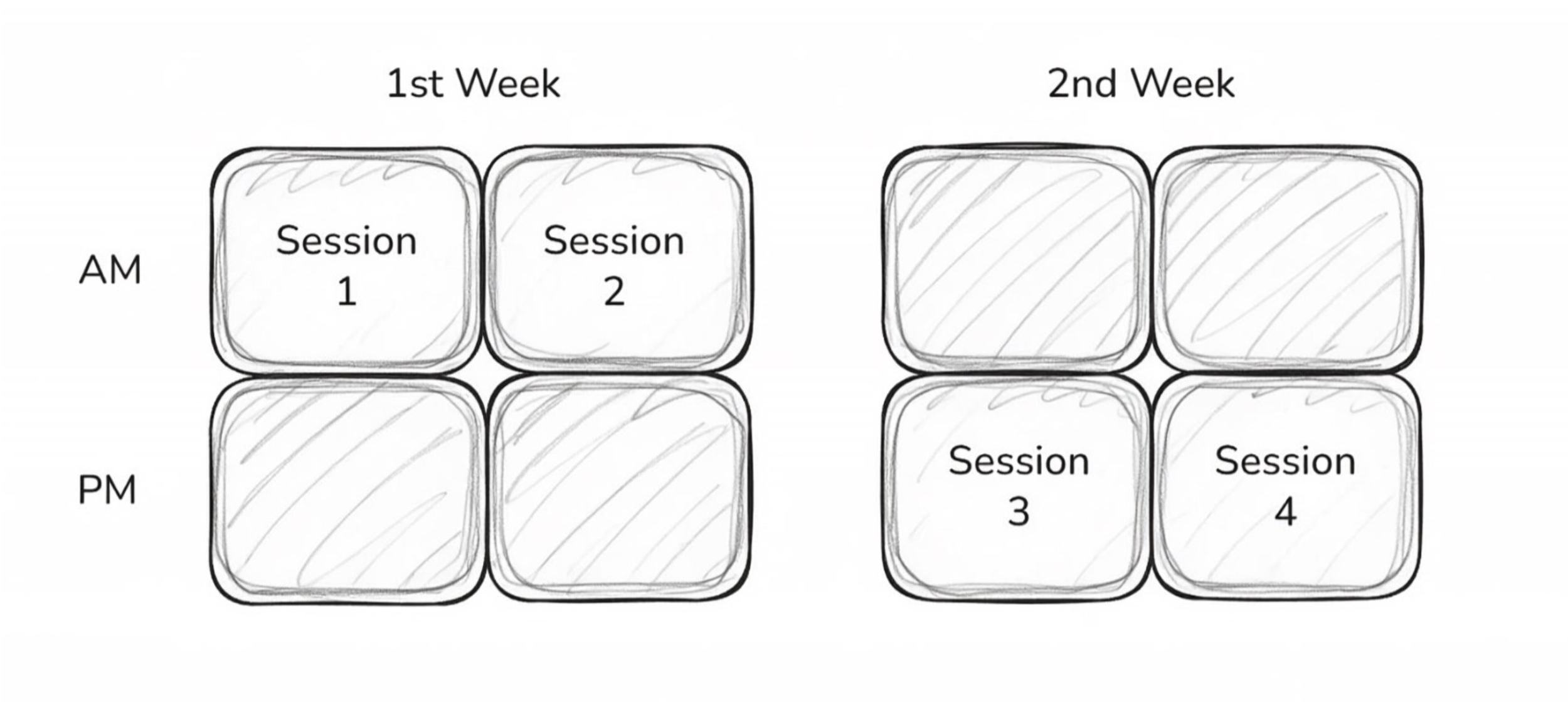
AM/PM Tracks: For groups larger than six, we split into morning and afternoon sessions. This allows participants to select the time that best fits their schedule.
Extended Schedule: Groups of 10-12 have the option to spread the four half-days across two weeks.
Participants in the metro Phoenix area have the flexibility to schedule on non-consecutive days.
-
The Portfolio Project is priced per participant, with tiered rates based on group size:
4-6 participants: $2,275 each
7-9 participants: $1,975 each
10-12 participants: $1,775 each
These rates reflect workshops conducted over four consecutive days. For groups of 10-12 opting to split the four sessions across two weeks, the rate is adjusted to $1,975 per participant to account for additional travel.
Participants in the metro Phoenix area receive 10% rate adjustment on small group sizes.
-
For peer-led groups organized independently of corporate scheduling, a Host serves as the group lead. The Host is responsible for selecting the workshop location (such as a private clubhouse or conference room), confirming participants, and coordinating with our team on scheduling.
In recognition of managing these logistics, the Host’s individual rate is reduced based on final group size:
4-6 participants: 10% reduction
7-9 participants: 40% reduction
10-11 participants: 75% reduction
12 participants: 100% (Complimentary Host Seat)
-
A one-year membership to the Online Resource Library (Tier 1 Access) is provided to all participants following the completion of the Portfolio Project. The library serves as a professional resource, providing tools and frameworks to support ongoing development.
There are three tiers of access based on level of engagement:
Tier 1: Alumni Access – Includes the essential project templates.
Tier 2: Partnership Access – Provides access to select modules.
Tier 3: Facilitator Access – Includes full workshop content and extended license for those scaling the project internally.
Note: Access to Tiers 2 and 3 is unlocked through the Corporate Partnership Benefits.
-
When an organization licenses the program, additional benefits are unlocked:
Online Resource Library Advanced Access: All project participants are upgraded to Tier 2 access, which includes select modules from the workshop.
Internal Facilitation: The ability to scale the program in-house through the development of internal guides.
The Regional Residency: A structured immersion designed to identify future portfolio leaders and prepare them for the scope and complexity of the regional role.
Beyond the Project: A library of advanced methodologies for senior operators and strategists, unlocked exclusively through our referral circle. Learn more here.
-
Workshops are guided by Keri Conyers. Learn more about Keri and the 7° team on the About Us page.
-
To account for the four-day time commitment and pre-booked travel logistics, the following policy applies:
Individual Cancellations: For any individual cancellation, the refund will be adjusted to maintain the existing pricing tier for the remaining participants.
Minimum Participation: Workshops require a minimum of four participants. If a cancellation brings the group below this threshold, a replacement must be identified to keep the workshop on schedule.
Group Cancellations: For group cancellations, any non-refundable travel or lodging costs incurred prior to the cancellation are deducted from the refund amount.
Example Workshop Schedules
Learn More
Preview the workshop and determine if this solution is right for you or your team.
Get Notified
Share your email and location to hear about market openings and availability in your region.